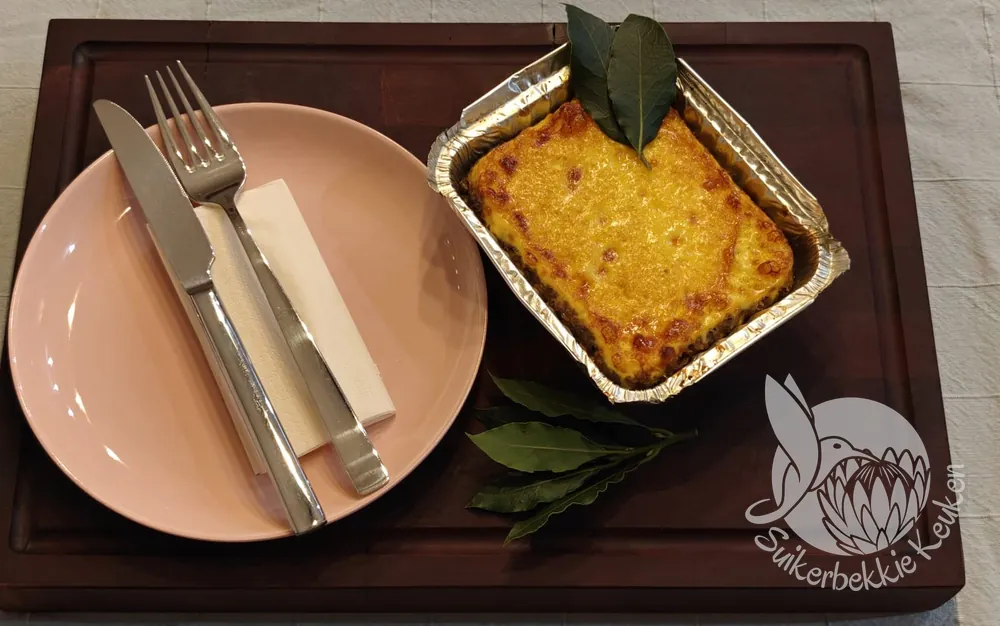
When I make bobotie, my whole kitchen smells like curry and turmeric, and I’m instantly back at my ouma’s table.
Bobotie is one of the oldest dishes in Cape cooking: spiced minced meat baked under a soft layer of egg and milk. It grew up at the Cape, where the cooking of Dutch settlers met the spices and skills of enslaved and free people from the East Indies, the community we now know as Cape Malay, brought to the Cape through the spice trade in the 1600s. Where the name comes from is not certain, most likely the Malay word for spices, boemboe, or the Indonesian dish bobotok. What is certain is how established it already was: Cape household inventories from the 1700s and early 1800s list special bobotie dishes, including an iron ‘bobotie pan’ recorded in 1816. Traditionally it is served with yellow rice, chutney and banana.
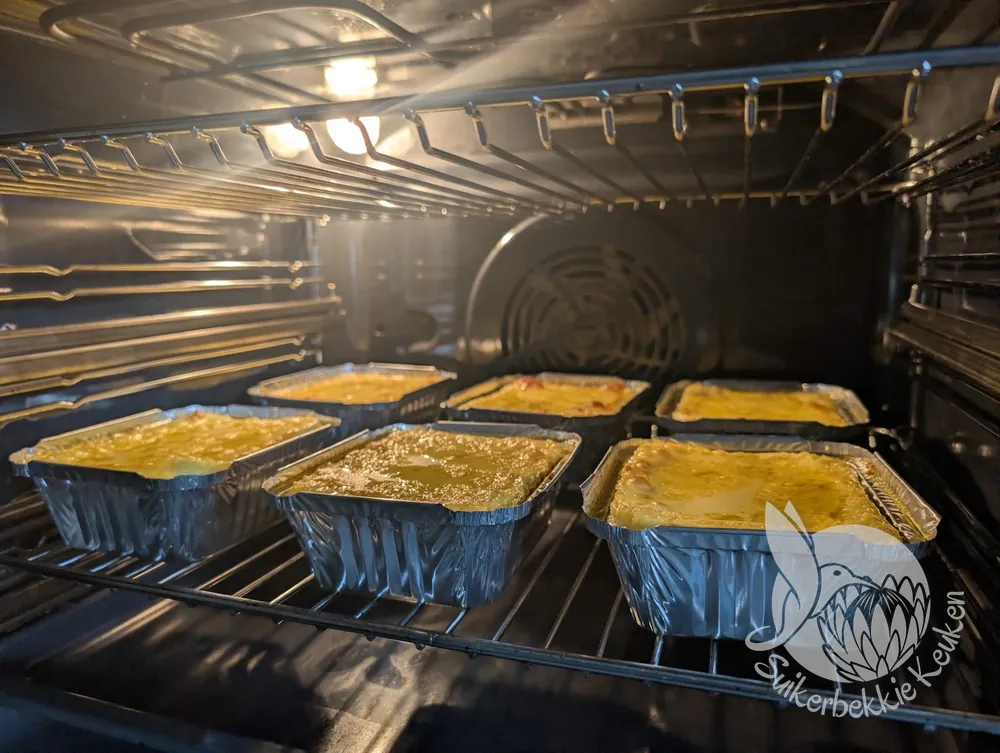
For me, bobotie is mostly a memory of my ouma. She always made it when the grandchildren came to visit, and the smell would reach us before we were even properly inside. As kids we didn’t like raisins, so she simply left them out, never making a fuss about it. I still do the same in my own kitchen today.
That warmth, that feeling of being welcome at her table, is exactly what I want to share with every bobotie that leaves Suikerbekkie Keuken. I sell it frozen, so at home you just need to heat it up and sit down at the table.
Order your own bobotie.
To the menu →