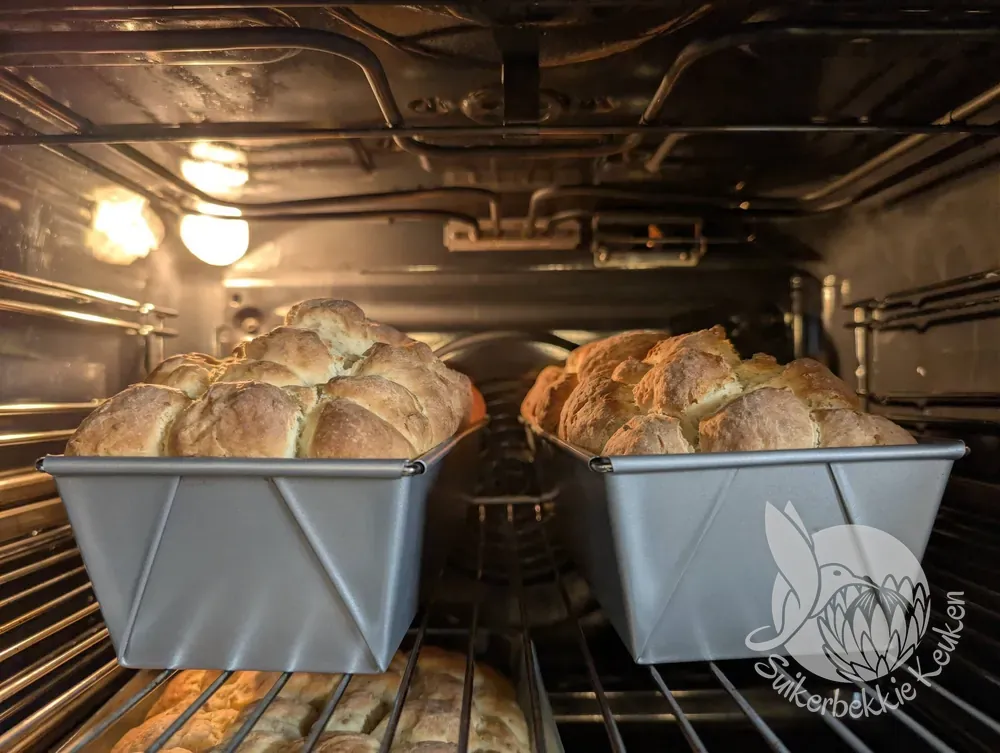
Our whole house smells like beskuit when we bake. First the bolletjies are rolled, the little balls of dough that come together to fill a baking tray. Then they go into the oven, and after baking comes the real work: hours of slow drying until they’re properly crunchy.
Beskuit are South African rusks, twice baked. The tradition came to the Cape with Dutch settlers long ago and became truly South African there. People used to take them on long journeys because they keep for so long, and to this day they simply belong with coffee.
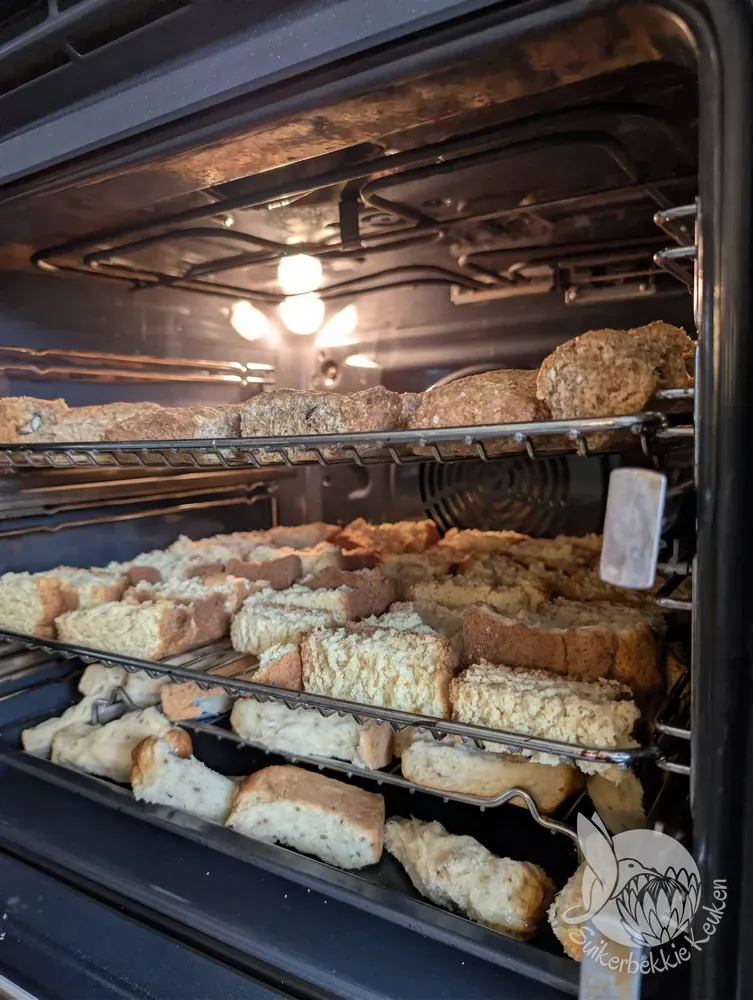
But for me, beskuit is mostly a memory. My mom and I always baked beskuit before a holiday. That was our ritual: coffee next to Nsemani dam in the Kruger Park, with fresh beskuit. I was about seven or eight when I helped her make the bolletjies. She taught me how to let the dough slide between your ring finger and thumb to get exactly the right size.
We made different kinds too, because my dad loved aniseed rusks and my mom loved brown rusks. And the bakers, that was us, got to eat the “flops”.
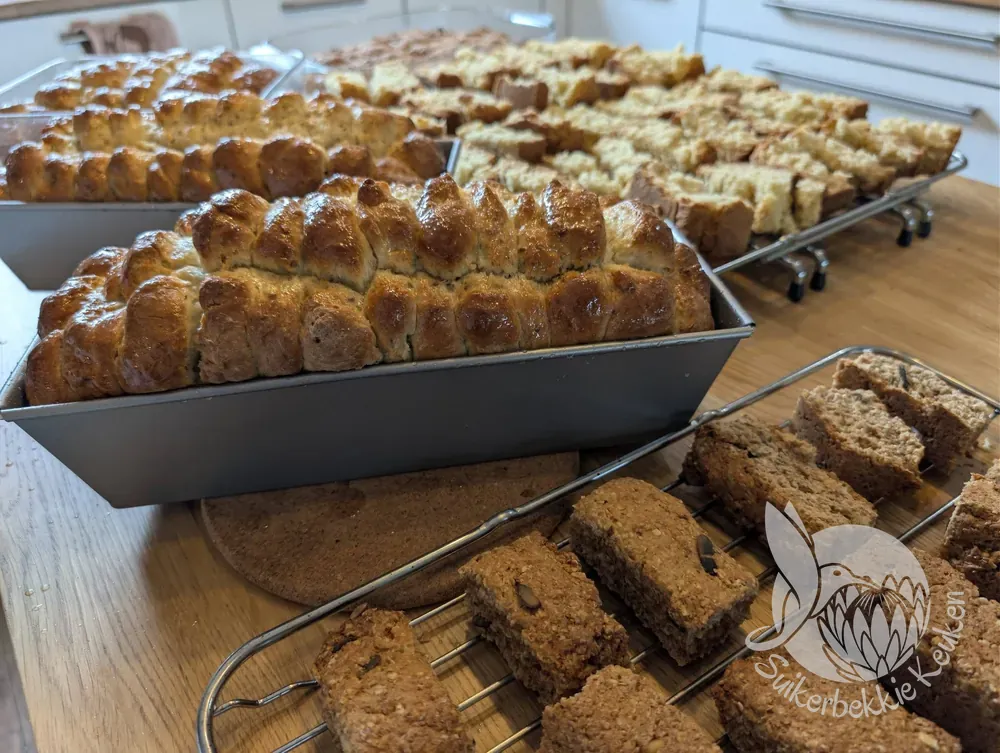
After that the house smelled like beskuit for two more days while everything dried. That warm feeling, that ritual, is exactly what I want to share through Suikerbekkie Keuken.
Wondering how to actually eat beskuit?
Read: How to Eat Beskuit →